SRT @ SCG : 241 Runs of the Highest Calibre

India vs Australia. January 2004. SCG. Series on the line. The Border-Gavaskar Trophy of 2003/04 was coming to an end and it was level pegging going into Sydney for the fourth and final test. The Aussies were coming off the back of a fairly comprehensive victory in the Boxing Day Test just a week ago. The stakes were high for the Indians going into the new year, and there were a billion hopes of seeing India win a test series down-under for the first time ever.

3 out of the 4 Indian top order batsmen had had a significant contribution in the series, with big runs off the bat of Virender Sehwag and Rahul Dravid, all of them coming at crucial times. Aakash Chopra also chipped in with a few handy knocks, laying a solid foundation for the strong middle order to come. The only man out of touch, was surprisingly, the master-blaster himself, Sachin Tendulkar. The Indian no.4 had scored a meager 82 runs in the first 5 innings, 2 of which included ducks. This left the legendary batsman with a big point to prove in the final 2 innings of the series.

Interestingly enough, Sachin had been dismissed caught behind in 3 of those 5 innings, all of them fishing outside off against the Aussie quicks. In a press conference prior to the start of the test, Tendulkar boldly stated that he won’t be playing a single shot through the off side in the entirety of the test match. This is a massive thing to say as the cover-drive is a stroke that is a result of muscle memory for Cricketers, let alone those playing for over 20 years. It would take a huge effort for Tendulkar to control his impulses and restrict his shots to straight down the ground or through the on side, but would he be able to do it? Only time would tell.

The 4th Test began with India winning the toss on a placid SCG wicket. A huge total was expected, especially given the form the Indian line up was in at the time. A solid opening start meant that the first wicket fell at 123. But the second victim fell soon after that, meaning it was the famous Indian no.4 who was due in to bat. The stage had been set by the Indian openers, and the shine was taken off the ball. It was now time for Tendulkar to make full use of this and put an end to his dry spell with bat.

The Aussie quicks had their tails up because of the two quick wickets, and given the form Tendulkar was in, he was seen by the hosts as a walking wicket. Little did they know what the master had in store. Sticking to his statement from earlier, Sachin refrained himself from any shots through the off side, making the Australians bowl to his strength, which was straight back past the bowler and off his pads. He frustrated the fast-bowling cartel, letting go of any deliveries outside the line of off stump.

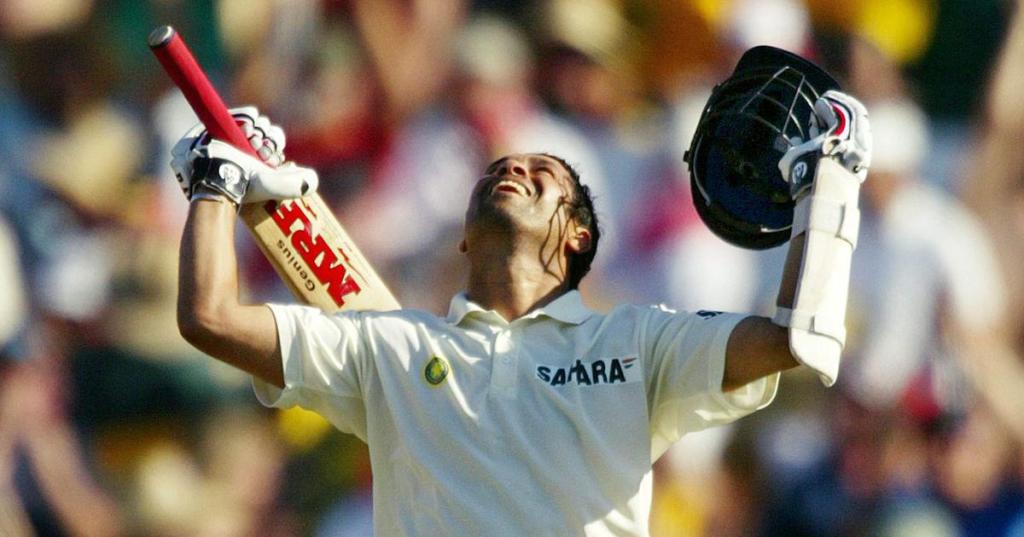
Soon the man with just 82 runs in the series looked like the man to look out for. The Indian no.4 was in full flow, with that beautiful straight bat coming down and showing the maker’s name. He took on the likes of Lee, Gillespie, Bracken and MacGill with complete ease, playing on drives and flicks at will. As the overs ticked on and the runs piled on, Sachin moved from 50 to 100 to 150 to 200, spending over 600 minutes at the crease, gracing the SCG turf with his strokes and taking India from one milestone to the other. No bowling change could inspire a breakthrough for the Aussies, as even the unorthodox wrist spinner was taken apart by the master blaster.

Sachin ended up unbeaten on 241*, and India declared with a mammoth total of 705/7. This huge first innings lead gave the men in blue the hope of winning their first test series in Australia, but that wasn’t to be. Nonetheless, India drew the test match, with Sachin scoring another unbeaten 60 in the second innings.

The reason this innings is remembered is not just because of the sheer number of runs that he scored, but the mental fortitude that he displayed in holding himself back from playing a stroke that he had struggled with. That sort of a control over one’s mind and technique was unheard of, and that is what put Sachin in a league of his own. The Wagon Wheel, and the memories from that historical innings will be long remembered by Cricket tragics all across the globe. This, along with 24 years worth of dedication is what will keep Indian fans forever grateful for the blessing that was Sachin Tendulkar.

-Vibhor Dubey
Every Cloud Has A Silver Lining

The prevailing situation has made everything feel as though it is spiraling out of control. There are clouds looming above us all, and just as it does in Cricket, these clouds have brought immense uncertainty and anxiety about the future. Coronavirus has brought the world to a halt, and much like everything else, Cricket has taken a toll too.

Had this not happened, we would’ve been in the second leg of the IPL, filled with excitement and wondering which 4 teams would make the playoffs. We would’ve seen fresh talent emerge, some surprising results and a whole lot of competitive Cricket to keep us on the edge of our seats. We would’ve seen MSD back in action, something that fans have been itching for ever since that WC semis in July. People have reverted back to their lives. Everyone’s focus has shifted from sport, and we’re focused on taking care of ourselves and the people around us. The stands are empty and there is a deafening silence in every single stadium across the globe.

But there is a silver lining to all of this. There was a lot of talk about the sheer amount of Cricket that was being played across the globe, and people were getting desensitized to the sport. People moved from one dopamine hit to the next, wanting more from each game till they eventually got no thrill out of it. Everywhere you looked, there was some sort of Cricket being played. This break, however – will give fans the much needed dopamine detox. Once this problem has been dealt with and Cricket continues, people will start appreciating the sport more. Our love for Cricket will grow stronger, we will start appreciating the little things more. An underrated bowler bowling a good opening spell, batsmen getting through testing phases, or a low scoring game – all this will start to feel enjoyable again.

This might bring back the eyes that Test Cricket has been missing for so long. People will come through the gates, turn on their TVs and follow every hard grinding session to catch what they’ve been missing so much. They will want to see all the big names back in action, and as a result, Cricket might flourish again, and for good reason. This phase resembles Test Cricket. It is testing our temperament, making us work hard and focus on the right things to make it out of a difficult phase. Until then, all we can do is ‘play out the session, and wait for the opportunity to cash in’,

-Vibhor Dubey

“Hero Starts With HER”

A lot of questions have been raised in the past about the future of Female Cricket, about how it’s going to be able to sustain itself in the grand scheme of things with the sheer lack of context and advertising. The biggest concern was always that this version of the sport never had the viewership it deserved. But one thing has become clear, the recently concluded T20 World Cup was easily one of the best things to have happened to Women’s Cricket.

The hype around the tournament was entirely different, and much of it was because of the way ICC chose to promote it. There was a buzz and a lot of talk about it, which is quite rare when it comes to Women’s Cricket. The inaugural game between India and Australia was a living proof of that, with people in big numbers showing up to witness the start of something great. For the two weeks that it lasted, the standard of Cricket was up, and we got to watch some of the most exhilarating Cricket that we’ve seen in years from this version of the sport.

Some of the games that went right down to the wire, or had a lot of swings along the way will be etched in the memory of every fan that witnessed it. Games like the semis between Australia and South Africa, Australia and New Zealand, or the finals were the highlights of the 2 weeks of Cricket. The tournament also helped bring recognition about stalwarts of Women’s Cricket in players like Alyssa Healy, Meg Lanning, Sophie Devine, Ellyse Perry, Heather Knight, along with some fresh talented bunch like Beth Mooney, Shefali Verma, Poonam Yadav, Megan Schutt, Jess Jonassen, Jemima Rodrigues, Lizelle Lee, among few others .

The finals was easily the best game of them all. It had everything, with Katy Perry lighting up the MCG with her voice, to the record-breaking 86,174 people in the stands. Two heavy-weights went against each other and Australia showed everyone why they are renowned to be the best in the world. The game gave flashbacks of the 2003 Men’s WC Final, with Australia giving India a thrashing in all 3 facets of the game.

There were smiling faces all around, and it was unimaginable in some ways to see MCG packed for a Women’s game. This says a lot about the nature of viewership in Cricket itself. What it lacks is not the skill or the entertainment, but the context and promotion that it deserves. From a marketing perspective, your product could be the best around, but if it isn’t given the sort of recognition that it deserves, then the customers won’t come to you. But it would be fair to say that these 17 days would have eased the pain associated with being a female. It was a wonderful spectacle, and one that will inspire millions of girls all across the globe to pick up the sport and realize that they too could be the pioneer of change and be the ones to bring laurels to their nation.

-Vibhor Dubey

Australian Captain Meg Lanning leads the victory lap after Australia deafeated India in the final in front of a packed MCG.

The Kiwi Revival

After being down and out in Australia a couple of months ago, New Zealand were everything but favorites going into the T20 series against India in January. The tour was going to be a fairly long one, and the spotlight was on the visiting side all along. The visitors responded in a terrific fashion, cleaning up the Kiwis in a closely contested series white-wash in the shortest form of the game.

The scoreline read 5-0, and it looked as though it was going to be a tour that the Men in Blue would well and truly dominate. The ODI series started not too long after that, and India were looking to continue their rich vein of form into the last 3 white-ball games of the tour. On a placid Hamilton wicket, the visitors put on a mammoth total of 347 in their quota of 50 overs, courtesy a flamboyant maiden ton from young Shreyas Iyer.

An India victory seemed almost inevitable, given the pace bowling arsenal that India possessed. Little did we know what we were going to witness. A bludgeoning opening start by New Zealand, followed by a strong partnership between Latham and Taylor seeing them through. Ross Taylor looked at his ominous best as he hit 109 off 84 balls, a knock that included 10 fours and 4 sixes. New Zealand made a game out of a chase that looked out of their hands at the half-way point. In the end they won comfortably with 11 balls to spare.

It was a beginning of something magical for the hosts; a resurgence that they had been craving for since their series defeat in Australia. Right after that Hamilton ODI, the juggernaut began, and continued. The Black Caps went on to win the One Day series 3-0, beating India comprehensively in all 3 games. This New Zealand side looked like a force to reckon with.

Then came the final frontier of the tour, a way to seal things up for both the sides and prove a point. The first of the two Tests took place in the capital, Wellington. The windy conditions put the hosts in an immense spot of bother as they got bundled out for 165 after being put into bat. The hosts, continuing their form from the white-ball format, took an unassailable lead of 183, then bowling India out cheaply again, and winning the game with 10 wickets to spare.

The Second Test was no different. The famous Indian top and middle order looked tentative and under-performed on a deck that wasn’t all that difficult to bat on. The likes of Kohli, Pujara, Rahane and Pant found it difficult to cope with the moving ball. The Black Caps on the other hand, like their last last 4 International games, continued from where they left off, and beat the No. 1 Test Team with a big margin.

This a terrific sign for New Zealand Cricket. They have stepped up in every facet of the game and look like a terrific team at home. Whether its Latham and Blundell at the top, Williamson and Taylor in the middle, or Boult, Jamieson and Southee with the cherry, all of their guns firing when they needed them the most. Hopefully this lot of players can take New Zealand Cricket in the right direction and go on to become players that we remember for the years to come.

-Vibhor Dubey

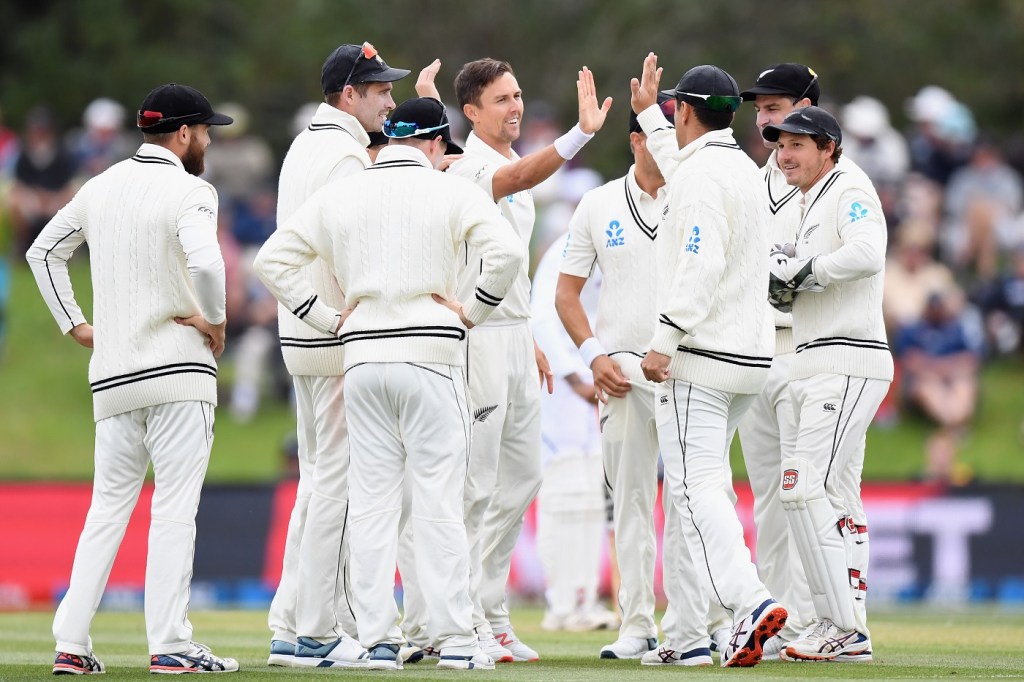
Trent Boult and his Kiwi teammates celebrate the wicket of Indian Wicket-Keeper Rishabh Pant.

The Underappreciated Art Of Wicket-Keeping

“If the man behind the stumps has not come to your notice, it generally means he’s doing an excellent job.”

In a sport which is called ‘The Batsman’s Game’, it is said that the bowlers are the labor class. That the players with the willow are the only one’s in the limelight. It has become a cliché to mention the workload of a bowler, and how hard they have to toil all day in the field. Amidst these discussions, there is one person who stays hidden despite working harder than anyone else on the field – The Wicket Keeper.

A job that is often overlooked, Wicket Keeping is taxing not just on the body, but also on the mind. A fast bowler will bowl a few overs, finish their spell, stand at fine leg with drinks, all the while staying switched off. The man with the gloves on the other hand, is in the thick of things, squatting down 540 times in a day of a test match, all the while staying mentally alert and ready to glove every ball cleanly. The only time a Wicket Keeper gets to switch off is when the bowler is going back to his mark.

That was a briefing on the workload side of the job. What goes terribly unnoticed is the sheer amount of technique work that is required to be a good Wicket Keeper. Ian Healy, in one of his keeping masterclass said “If even my teammates don’t understand what goes into the job, I can’t expect the public or the media to.” Whether it is standing back on a seaming deck, or standing up to the stumps to a spinner or a medium pacer, a keeper is required to stay low, get up with the pitch of the ball, make dynamic yet swift movements on either side while having soft hands.

The best in the biz do it all and make it look easy, and yet they go unrecognized. If I ask the reader to think of great keepers, the names that will pop into your head will be any of the following – MS Dhoni, Adam Gilchrist, Kumar Sangakkara, Brendon McCullum, Jos Buttler, Quinton de Kock. The commonality among all these names is that the reason for their fame is their batting prowess. If you ask me, or other people who have kept wickets at a respectable level, the names that will pop up are – Brad Haddin, Tim Paine, BJ Watling, Moin Khan, Ian Healy, Allysa Healy, Nayan Mongia just to name a few. The commonality among these people? Barely anyone knows them because they are pure wicket keepers, and their batting performances didn’t satiate the needs of people watching the ‘Batsman’s game’. People following the sport don’t understand the role, hence overlook it and focus on the performance with the bat. The only time a keeper comes into public notice is when they miss a catch or a stumping, thereby ‘undoing’ all the good work they managed throughout the day’s play.

Kumar Sangakkara, a well known Keeper-Batsman, averaged 40 while keeping wickets for Sri Lanka. He then left keeping, and his average since then jumped to 60. Brendon McCullum, Ab de Villiers, are also a few names who got better with the bat after giving up the gloves. This is an indication of the toll the demanding job can have on a player. Despite the little light and appreciation given to Wicket Keeping, it still remains one of the most beautiful arts in the game of Cricket next to Leg Spin Bowling. And although unlikely, I hope this blog can make you appreciate the arduous task that is Wicket Keeping, and look at it in a more positive light.

-Vibhor Dubey

Haddin, Paine, Moin, Allyssa, Buttler & Healy keeping wickets.

The Genius Of Virat Kohli

Legendary Cricketers have the habit of playing innings that leave you in awe for a while. I am very sure everyone who witnessed Virat Kohli’s genius with the bat last night, will tell you that they woke up this morning in disbelief about it. I have been following Virat Kohli since his 2nd year in International Cricket, and I regard that innings last night as his best in T20s. Yes there was the one against Australia in the WT20 in 2016, or the chase against Pakistan in the Asia Cup in the same year, but there was something very different about this innings against the West Indies that surpassed all of his magnificent knocks.

94* off 50 deliveries. One’d look at that and say WOW he struck at a SR of close to 200, but things were very different in the first 24 deliveries of the Indian captain’s knock. He was struggling to time the ball, they were all coming off the edge, and it looked as though the chase was going to be a steep one for India. The Windies players riled Virat up as soon as he came out in the middle, with everyone gathering and chirping a few words. It looked like that got to Virat, as he was looking to hit the ball hard, quite uncharacteristic of the man who is known to be a proficient timer of the ball.

They say good batsmen go back and analyse after getting out, and rectify the technical errors in the next innings. Well, the difference between good batsmen and great batsmen is that the latter don’t wait for the next innings to rectify their mistakes. That’s exactly what Virat Kohli did in the second half of his knock. Understood that he was looking to add pace to deliveries that were already coming on pretty well, and then rectified that mistake by resorting back to the way he knows how to play best. Time the ball, play proper Cricketing shots that still fetch you runs at a good pace.

From then on, Virat played some shots that will be etched in the memory of all Cricket fans. Yes, the flick over mid-wicket was scintillating, and is rightly talked about a billion times already; but those sixes over covers, or the one over Mid-off were absolutely breathtaking. Anyone who has played Cricket will know it’s not easy to go over cover, let alone hit a six that flat. Not just the boundaries, Virat made sure that he ran between the wickets hard, converted ones into twos, and pushed everyone he was batting with to run the first one hard, regardless of the fact that he himself was batting for over an hour. Not just that, he also looked like the Virat Kohli of the past, who would take the opposition on with words, stare them down and let them know who’s the boss.

That, to me was a knock I’ll be remembering and talking about for a long time, and so will all the fans across the globe. Virat Kohli is taking the standard of not just batting, but also Indian Cricket to a place that has never been explored before. He is inspiring a generation to not just play Cricket, but also show them how it is done, and what is expected of them. Not only will Virat Kohli end up as the greatest to have graced the sport, he will leave a legacy that will be carried forward for generations to come.

-Vibhor Dubey

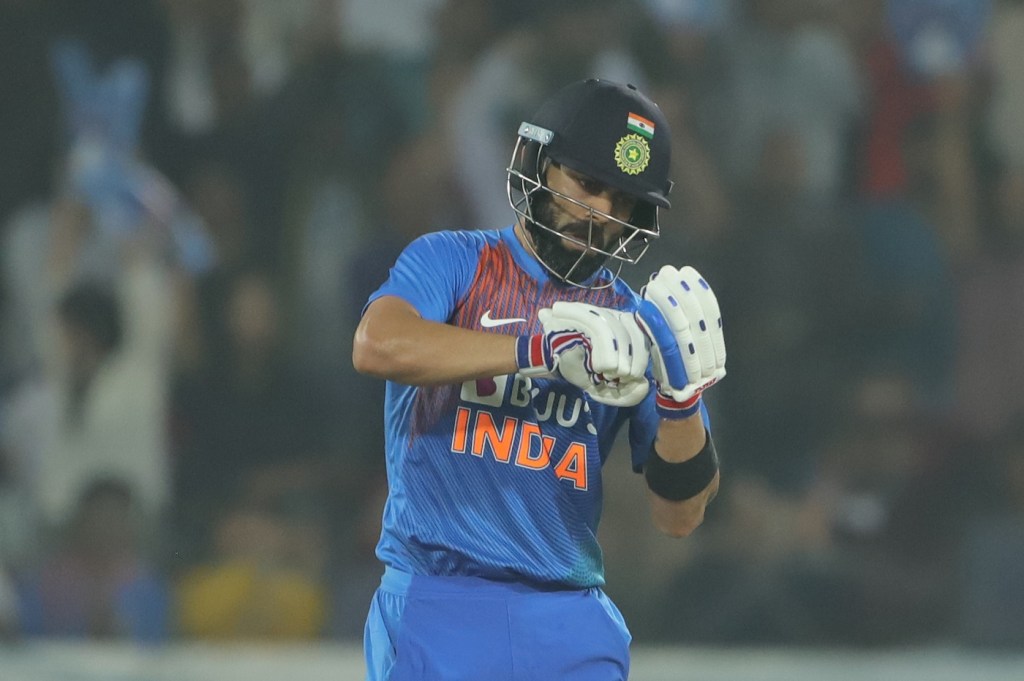
Indian Skipper Virat Kohli gives Kesrick Williams a taste of his own medicine after hitting an unbelievable flick over mid-wicket.

Labuschagne’s Dream 2019

Leading the charts for the most test runs in 2019, Marnus Labuschagne has really come about in this Australian test squad. In a recent press conference, Marnus pointed out how everything about his career has been turbulent, yet rewarding at the same time. Things have always been a bit unconventional for the 25 year old from Queensland.

Avid Cricket lovers first heard the name in the year 2014, when he took a screamer at short leg as a 12th man to dismiss India’s Varun Aaron. Videos starting surfacing of Marnus catching slices of onions in his house to work on his reflexes. 4 years down the line, he made a place for himself in the test side at Dubai, and didn’t get off to the best of starts; scoring just 81 in his first 4 innings, with a duck in his very first test innings.

With a few decent knocks against India earlier this year, he made sure that he got on to that plane to England for the all-important Ashes. It was in this series that we saw something new. In the second test at Lord’s, Steve Smith had been hit in the head by a 92 mph Jofra Archer delivery. He had to go off, and Cricket saw it’s first ever concussion replacement in Marnus Labuschagne. There were doubts about how he’d fare against a lethal bowling attack and testing conditions. The classy right hander put all those talks to bed as he eased his way to a half century in not just that innings, but in his next 3 innings after that.

He has taken that form with him against Pakistan, and scored 2 back to back 100’s. There might be a lot of unconventional things about Marnus’ career, but there certainly isn’t anything unconventional about his technique, as he is now scoring runs for fun at number 3 for Australia. As someone who enjoys watching classy test batsmen go about their business, I hope Marnus Labuschagne can continue having years like this one, and make that no.3 spot his very own.

-Vibhor Dubey

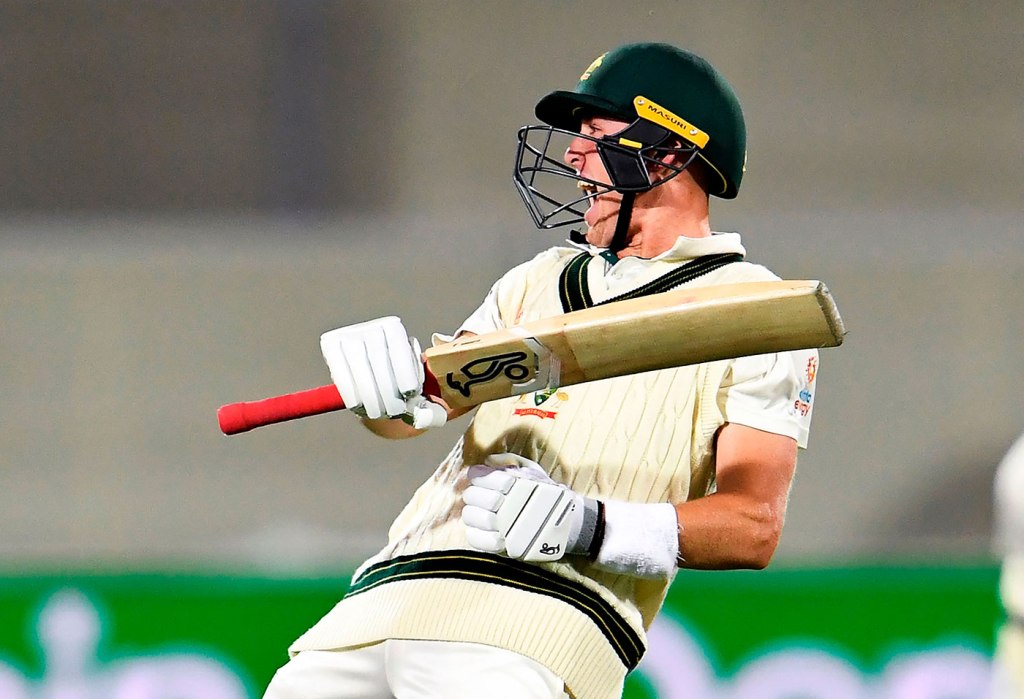
Australian right hander Marnus Labuschagne celebrates his 2nd consecutive 100 against Pakistan at the Adelaide Oval.

The Rise Of Mayank Agarwal

As I write this, Indore is witnessing one of the best things to have happened to Indian Test Cricket in the past year or so. Mayank Agarwal is currently batting on 188*, on his way to his second double hundred of the season, and we’re only half-way through November. Along with scoring a plethora of runs in First-Class Cricket, the Indian opener has made a name for himself in List-A Cricket as well. With mammoth scores in the recently concluded Vijay Hazare trophy and Deodhar Trophy, he has captured the attention of everyone who is a keen follower of Indian Domestic Cricket.

At the start of this decade, early 2010s, Mayank was known as a predominantly limited overs format batsman. But with intense and gruelling work that he has put in season-in, season-out, he has transformed his game and has become an all format Cricketer. He got more than 1100 runs in the Ranji Trophy season of 2017-18, and since then he hasn’t looked back. There was immense competition for an opening spot in the test side, with the likes of KL Rahul, Prithvi Shaw, Shikhar Dhawan, all scoring, and scoring big. But the man from Karnataka didn’t stop. He didn’t just knock on the selector’s door, he broke it down with consistently scoring big runs.

As someone who used to play Cricket professionally in the same academy as him, I’d seen his work-ethics from close quarters. It is now that those long hours in the nets has paid off. Mayank’s hunger for runs has absolutely bemused me. It is one thing to have a good run, it is incredible to keep that up year after year, season after season. His willingness to score runs is second to none when it comes to Indian domestic cricket and that is one reason why he has delivered time and time again in all the opportunities that he has gotten. His last 5 innings (1 of which is still continuing) in Test Matches have amassed over 530* runs. He is a prime example of how the sheer hunger for runs can take you a long way, be it any format.

As a fan of Test match batting and players who are technically sound, I really hope Mayank cements his place in the side and makes the opening slot a place of his own. And I wish that in 20 years time when we talk about this dominant Indian side, that we can remember this name as someone who took Indian batting to a whole new level.

-Vibhor Dubey

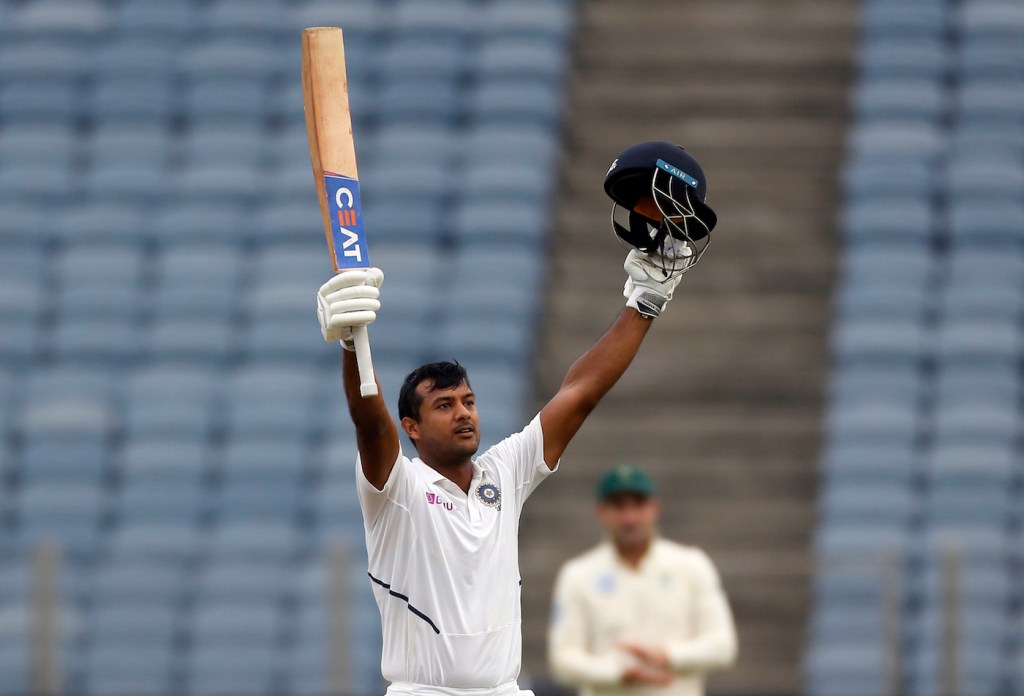
Indian Opener Mayank Agarwal celebrates after getting to his 100 vs South Africa in Pune.

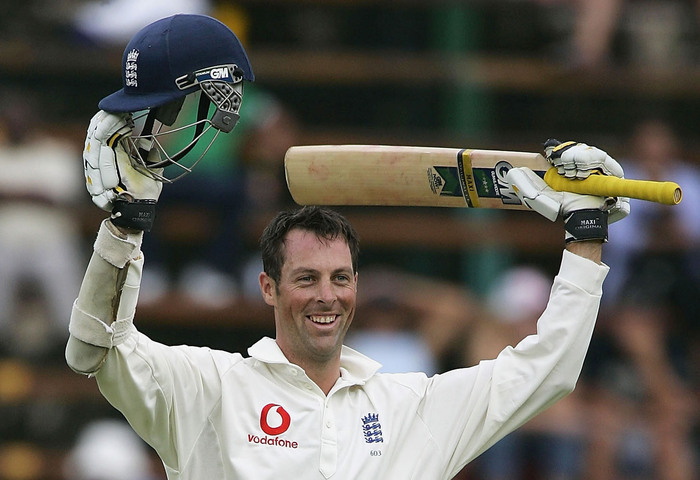
The Illustrious Career Of Marcus Trescothick

Longevity is one word that comes to mind when we describe great cricketers. Someone who has stayed around and played for long enough, and has had a substantial impact on the sport in one way or another. One such cricketer was Marcus Trescothick. The left handed opening batsman represented Somerset and England for a staggering 26 years. Often overshadowed, he was an integral part of the English side that won the famous Ashes series of 2005.

The word that describes Trescothick the best is Stoic. What stands out about him is not only the fact that he played First-Class Cricket for all those years, but also what he had to go through in that time. Cricketers often have to deal with a lot of negative stuff coming from outside. But it’s even more difficult to overcome when it takes place between the two ears. Mental Health, when it comes to sport, is often not talked about. But every cricketer knows 80% of the sport is played in the mind. Trescothick had to deal with severe depression in his days of playing for England. He had to fly back home numerous times due to the stresses of competitive sport. He finally decided that it was time hang up his England boots in 2006.

Despite his challenges, Trescothick continued to serve Somerset for another 13 years, and is still remembered by keen Cricket fans all across the globe. His authoritative square cuts and drives are one of the most elegant that the game has seen. His journey shows us how in a sport so popular, mental health is still rarely documented. And that despite all the challenges, it is still possible to stay determined and make a mark of your own.

– Vibhor Dubey

Ben Stokes’ Headingley Heroics

It was the 4th day of the 3rd Ashes Test at Headingley. With 350 odd runs required for England to keep the series alive, people and pundits had already written them off. Everyone knew it would have taken a serious miracle for them to stay in the hunt, let alone win the game.

England looked scratchy as their 4th wicket fell at just 159 runs, still 200 away from the target. It would have taken a heroic innings for them to cross the line. Just over a month after their unbelievable final victory at the World Cup, Ben Stokes found himself in the middle of it all, with the series hanging by a thread and England staring down the barrel of defeat. The hosts wanted him to do something similar if they were to keep the series alive. And boy, did he deliver.

With wickets falling at the other end, Ben Stokes kept going at his ferocious best against some of the top bowlers that Australia had. Some of the shots that he played in his innings were mind boggling to say the least. But it all seemed like it would go to waste because of the fall of wickets at the other end. 9 down, still 73 to get, England looked all but done. Jack Leach walked in, and nobody could have expected what was about to happen.

Ben Stokes went full-throttle as he marched past 100. No celebration after getting to his 100, knew the job was still half done. Played some outrageous shots, and backed it up with some clever cricket with Jack Leach at the other end. The game went right down to the wire. Dropped catches, missed run-outs, wrong umpiring calls, it was all happening out there in the middle at Headingley.

2 were required, and tail-ender Leach was at strike. He was still to get off the mark in their partnership of 70+, and all that was required of him was a single, easily the most important single of his career. And he delivered. Stokes finished it off with a backfoot punch through covers, and the crowd erupted as they witnessed possibly the best test innings ever played in the history of the sport. That 135*, and the entire test match will be edged in every Cricket fan’s memory for the years to come. This Ashes Series has truly lived up to it’s hype.

-Vibhor Dubey

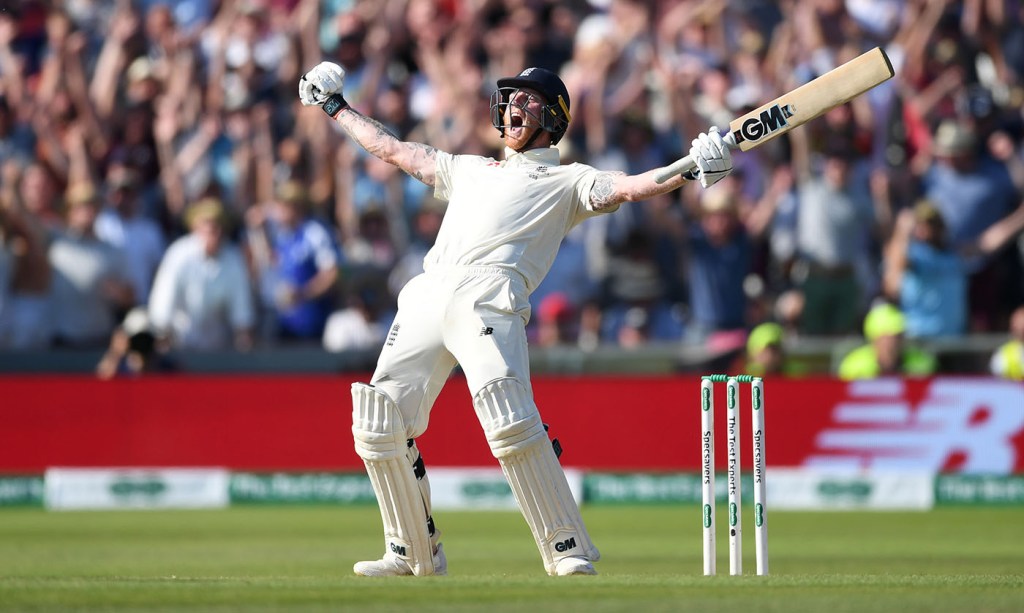
An ecstatic Ben Stokes roars after scoring the winning runs at Headingley.