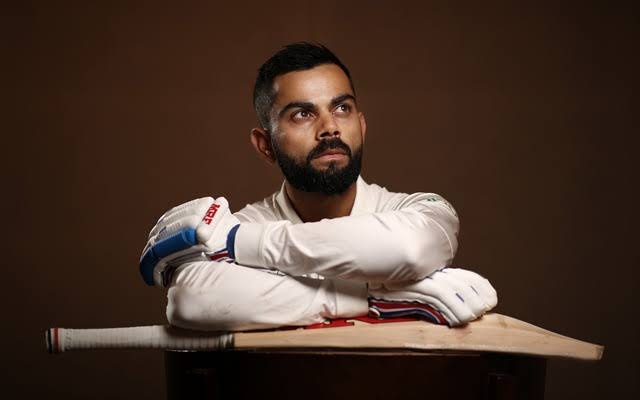
Kohli’s Immortal Legacy

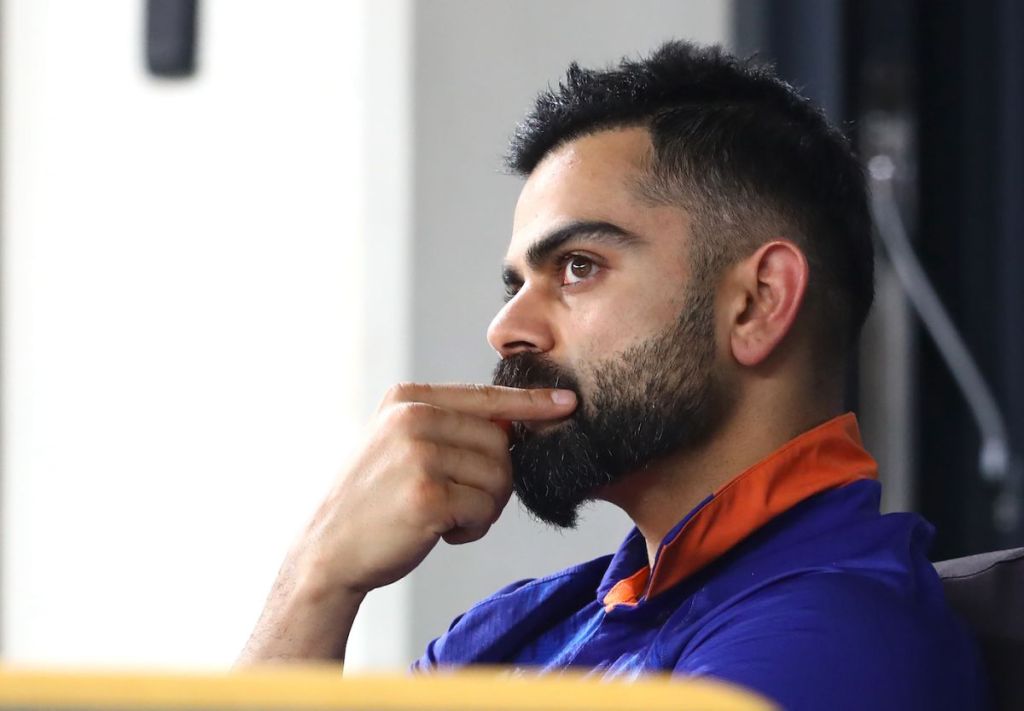
Not just a leader, but an alpha and a visionary. ©Ryan Pierse/Getty Images

Seven years ago in Melbourne when MS Dhoni passed the baton of the Indian Test Captaincy forward, the Indian Test side had all sorts of holes that needed to be filled. Winning a test overseas felt like an anomaly. Winning a test series, a farfetched dream. India was still known for dominating and decimating oppositions at home, with both Ashwin and Jadeja spinning a web around any visiting side on conditions that suited the spin-duo.

Yet, when it came to the fast bowling cartel, there was still much to be desired. India hadn’t produced an out-and-out quickie, neither had they produced a consistent and reliant fast bowler for all conditions since we last saw Zaheer Khan don the Indian whites. With mediocre fitness levels and humiliating overseas series defeats, it was absolutely clear that there had to be a massive revamp in the Test set-up going forward in the years to come.

And that is exactly what happened right from the outset. The Test Captaincy was handed over to Virat Kohli, someone who would revolutionize the way the Indian side looked at playing overseas. They were no longer playing to participate or going on tours to learn, they were there to dominate. We had seen glimpses of what was to come just prior to MSD’s retirement, when in the opening game of the Border-Gavaskar Trophy in 2014, Virat was the stand-in skipper due to MSD’s unavailability.

No one who has followed Indian Cricket from close quarters in the last decade will forget what transpired on that 5th Day at Adelaide. India needed 350+ to chase on the final day, on a deteriorating deck that was starting to assist off-spinner Nathan Lyon significantly. Many Pundits had already written India off and the best they were expecting of the visitors was a hard-fought draw. The Indian skipper had other plans as he decided from the get-go that his team was not there to survive, but win. Murali Vijay and the Skipper himself took the game on and India were absolutely cruising along.
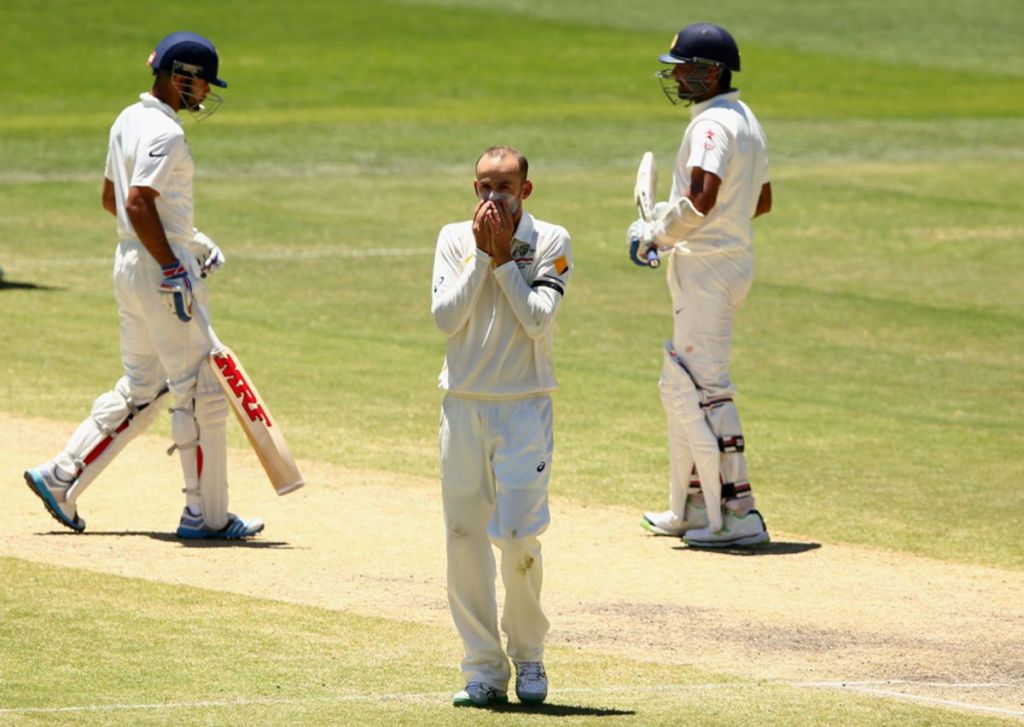
It was clear that attack was the best form of defense. ©Getty Images

Virat went on to score a mammoth 141, his second hundred of the game. It was only when Lyon dismissed the two set batsmen that the game shifted back in Australia’s hand. Even though India fell 48 runs short of the huge target, the intent made it clear that Virat doesn’t just bat aggressively, but takes that aggression into every aspect of his game.
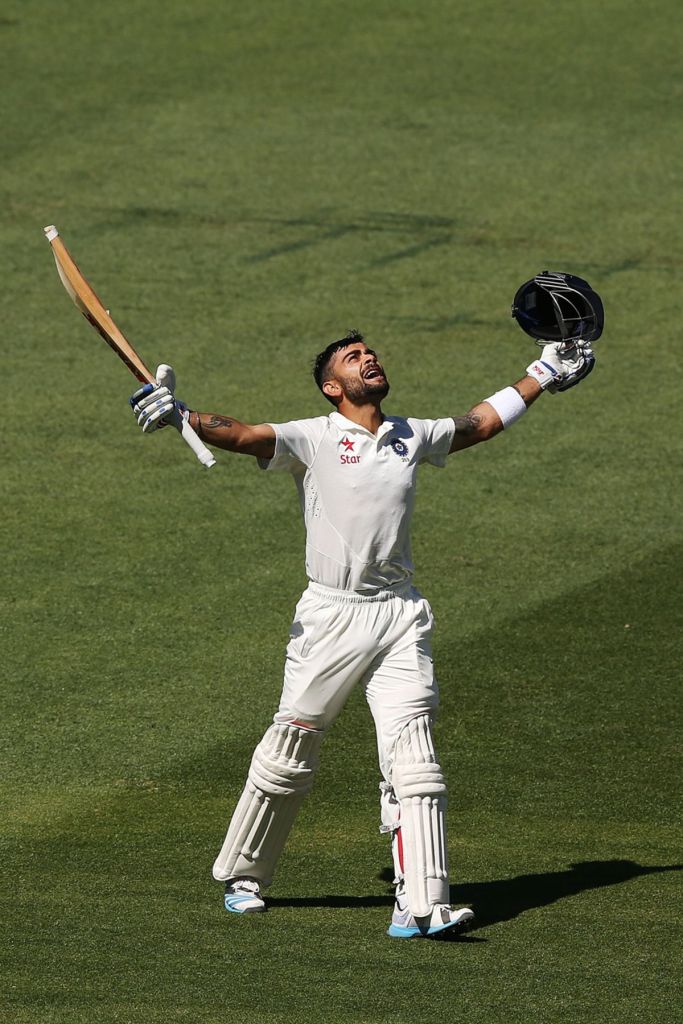
A knock for the ages. ©Getty Images

That series also saw many verbal volleys, showing clearly that this young Indian side was fearless with their words too. KL Rahul, who had struggled in his first test at Melbourne, was low in confidence going into the 4th test in Sydney. But he scored a classy hundred filled with ruthless strokes, and credits Virat Kohli for backing him, having a word with him and instilling that confidence in him. The direction Indian Cricket was headed in was for all to see.
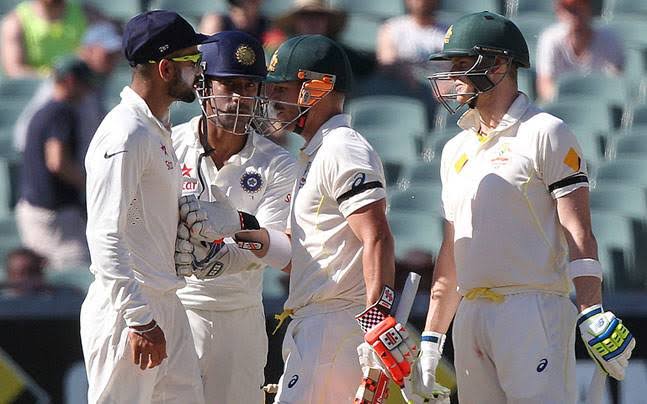
Not one to back down : Virat Kohli taking on David Warner in a verbal volley.

It had been a trend in the Indian test set-up up until that point to play fast-medium bowlers who swung it but didn’t hit the deck hard enough to be threatening in foreign conditions. Virat made no hesitation to change that, and brought in pace bowlers who consistently bowled 140 km/h+. He believed in playing 4 specialist bowlers and demanded of them to furnish their fitness to a level where they can bowl long spells, be it in the heat of Barbados or the cold of Wellington. Soon we saw a rapid change in the quality of Indian fast-bowling. Something which was imperative to win overseas, and something that we hadn’t seen in all our years of following this team.
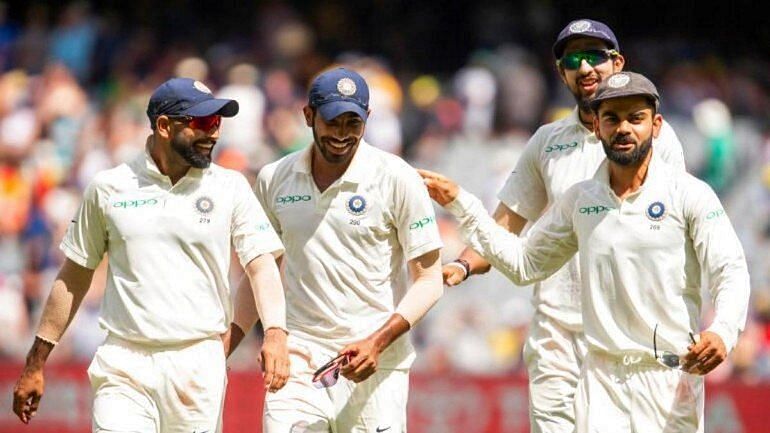
India soon became a country rich with quality fast bowlers under Virat Kohli.

Virat led from the front and never demanded anything of his team that he couldn’t do himself. His own fitness levels skyrocketed in the years of him taking up the captaincy. The added responsibility never seemed to burden him. In-fact, it took his batting to another level and it got to a point in 2016 where he was scoring runs for fun. No matter where they played, he managed to notch up one daddy hundred after another, and converted a fair few of them into double tons. The rest of his teammates flocked behind him and followed his fitness regiment to the T. They were training harder, eating cleaner, sleeping better; and as a result, the entire culture of the team turned around. This was no longer just a team, it was a team that believed.
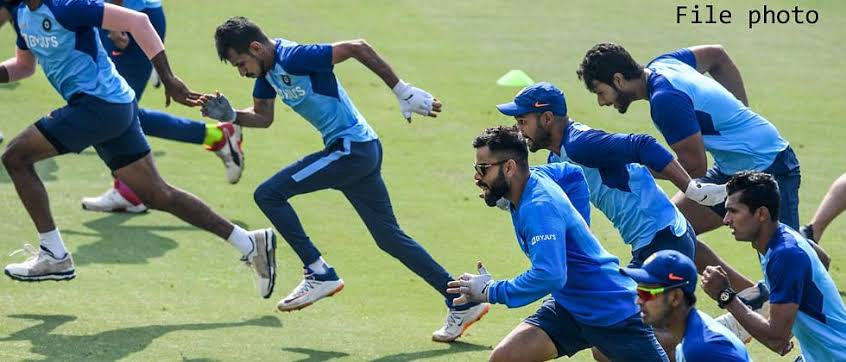
A new-look Indian side that was driven to be fitter, faster, stronger. ©IANS

In 2016, India got to the number one test side in the world. This was the accumulation of 2-3 years of doing the processes right and always keeping in mind the vision of taking Indian Cricket to the next level. 2018 was yet another incredible year as India won a test each in England and South Africa, and then achieved the unimaginable feat of beating Australia at their home soil by 2-1. The Juggernaut of winning away from home continued and in 2021 India were ahead of England by 2-1 before the decider was called off. Kohli amassed a total of 40 wins in the 68 Tests that he captained, and stands firmly as the best Indian Test Captain to date.
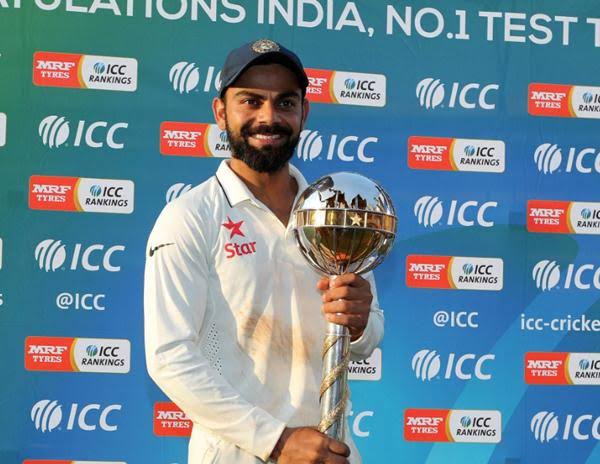
On top of the world : Virat Kohli with the test mace after India became No. 1 ranked in ICC Test Rankings.

Amidst this, the last couple of years have been dry for Virat Kohli when it comes to scoring runs. He has been India’s premier batter in all three formats for more than a decade, but has failed to score a hundred for over 2 years. This could be a result of the intense workload that has been on him nonstop, and the gruelling nature of bio-bubbles. Whatever it may be, it has led to the unexpected to happen. The man who has taken Indian Cricket to another level, the man who inspired a whole bunch of Cricketers to turn their fitness and game around, the man whose ruthless and passionate energy brought much joy to all who watch the sport, is now stepping down from the captaincy of the Indian Cricket Team.

A Formula-1 racing car doesn’t look good going at 80 km/h, and just the same way, Virat Kohli, who believes in giving his 120% every time, wouldn’t look good giving his 80%. We will miss his fiery press conferences, the energy he carried out leading his side, his brilliance as a captain and most importantly, the priority he gave to Test Cricket. But even though we will never see Virat the skipper walk out in his Captain’s blazer again, we can be proud that we had the privilege of witnessing a legend who has taken Indian Cricket to supreme heights, and has sparked a new light in the hearts of millions of kids who dream of one day leading their country at the pinnacle of this sport, Test Cricket.

-Vibhor Dubey
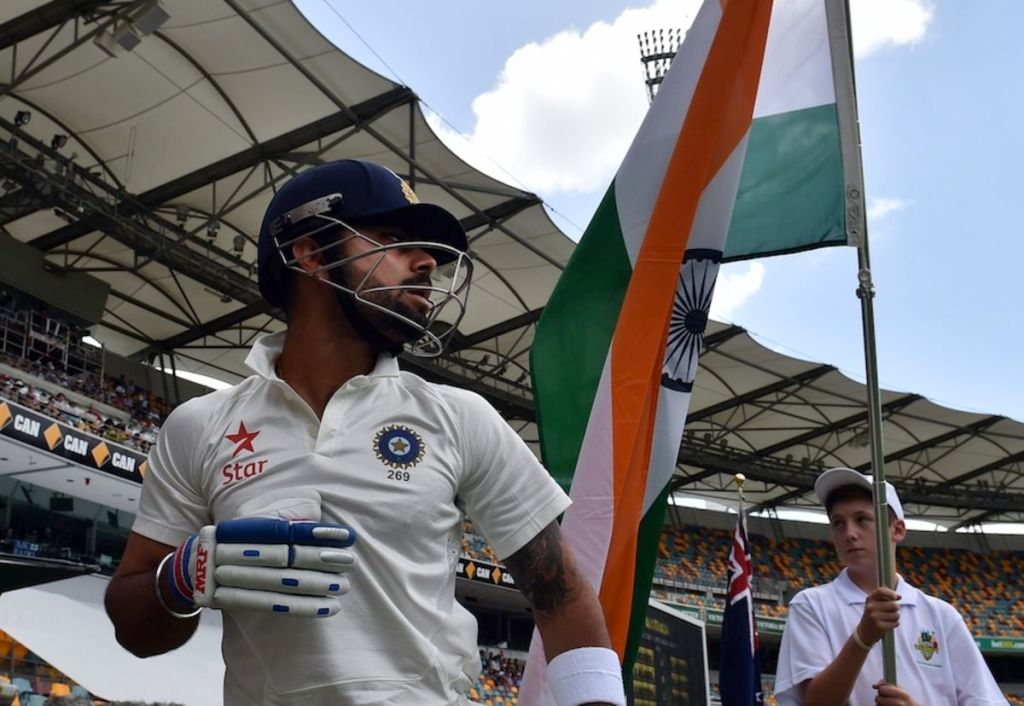
A man who always put the nation before himself. ©Getty Images

Wade & Stoinis Bludgeon Their Way To The Finals

The penultimate match of the 2021 T20 World Cup started off decently for Pakistan as their formidable opening duo Mohammed Rizwan and Babar Azam led the way through the powerplay. Both Azam and Rizwan looked comfortable at the crease. It was only after the duo notched 71 on the board that the partnership was broken by Zampa. Rizwan on the other end took the attack to the opposition and played at a healthy strike rate.

Pakistan cruised through the middle overs as not even the pace of Starc, the hard lengths of Hazlewood or the accuracy of Zampa seemed to bother the in-form Rizwan. Even the left-hander Fakhar Zaman, who has taken on the middle order role recently, started going after the Aussie bowlers. It looked as though Pakistan would easily get to 180 with the firepower they had in the bank. But Pat Cummins in the 19th over pulled things back magnificently, conceding just 3 and taking the crucial wicket of Asif Ali. But Fakhar Zaman continued on his merry way as he used the crease to wonderful effect in order to negate Mitch Starc’s yorkers. He hit Starc for two huge sixes over long on and widish long on in the final over to get Pakistan to 176/4, which looked impressive given the watchful start.

The Men in Green know a thing or two about getting off to excellent starts as Shaheen Shah Afridi yet again made early inroads in his very first over and dismissed skipper Aaron Finch with a beautiful in-swinger that hooped in late and trapped Finch in front. There was yet another shout for LBW against Marsh which was turned down. Marsh made full use of that reprieve. He drove and pulled the Pakistani pacers for boundaries. It was boundaries galore as David Warner was also striking the ball well. Australia had a great powerplay and scored 57 for the loss of just 2 wickets.

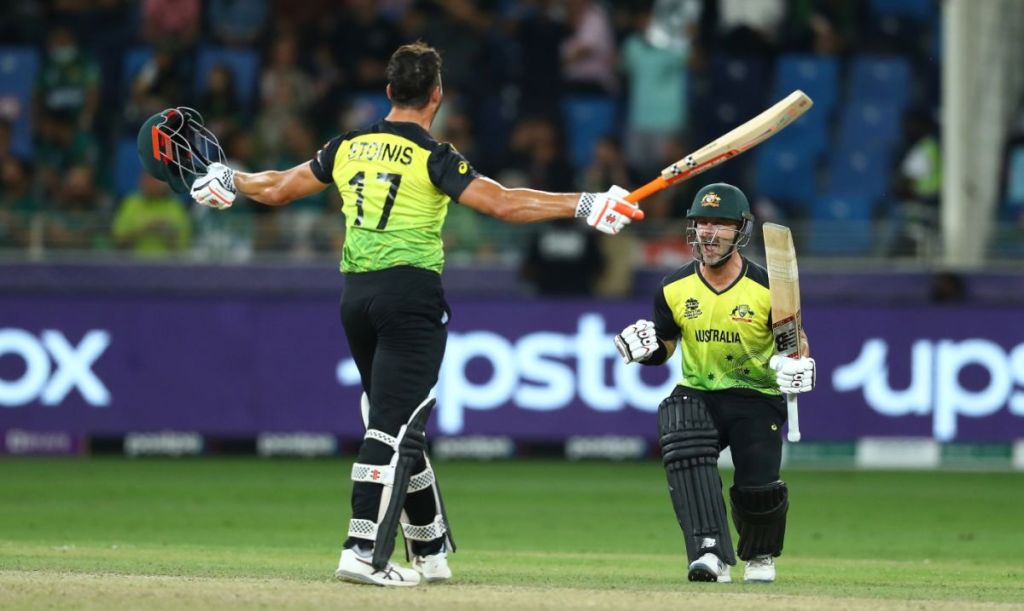
Warner was at his ferocious best and raced to 49 off just 30 balls before Shadab Khan’s tossed up leg-spinner sent him packing. Shadab was on fire as he had picked up Maxwell too, who reversed sweeped one straight to the sweeper at deep point. Shadab ended up with figures of 4/26. Australia were tattering at 103/5. The pair who won Aussies their first game of the WC against South Africa were now in the middle. Marcus Stoinis and Matthew Wade needed to get 72 off 42 to get Australia to a World Cup final.

After a couple of dry overs, the runs started to come thick and fast for Australia as Stoinis and Wade bashed the Pakistani pacers for 12+ runs every over. The pacer who had started off proceedings was bowling the 19th with 22 to defend. Wade pulled one to deep midwicket and was dropped by Hasan Ali. In a way Hasan Ali dropped the game as Australia’s keeper held his nerves and finished things off in the next 3 balls, tonking one over square leg, and scopping two sixes over fine-leg.

With that, Australia have made it to their second ever T20 WC final, and give themselves the chance of lifting the cup for the very first time. They take on New Zealand on Sunday. It will be a riveting encounter when the two sides go head-to-head with millions of eyes glued on them.

-Vibhor Dubey

Marcus Stoinis and Matthew Wade celebrate after getting their team through to the World Cup finals. ©ICC via Getty Images

Mitchell’s Brilliance Ensures NZ One Step Away from History

The all-important game, the first of the two semi finals went underway between England and New Zealand on a two paced wicket. England went out to bat with their premier opener Jason Roy sitting out because of injury. Johnny Bairstow who was opening in place for him, did his best to emulate Roy by trying to get boundaries from the get go, but trying to force runs on a tacky pitch proved to be his downfall as he was caught at mid-off.

Buttler and Malan tried to consolidate a partnership, with the latter trying to up the ante with some gorgeous drives and cuts through the off side and confident looking pulls through midwicket. Moeen Ali joined him and went at it from ball one. The left handed from Worcestershire was timing the ball exquisitely as he pumped Sodhi, Boult and the likes for huge sixes. He raced to 51 off 37 deliveries and remained unbeaten at the end. Liam Livingstone also joined the party and scored at a ferocious rate, scoring 17 off 10 balls to get England to a defendable total of 166/7.

The NZ chase started off poorly as their experienced opener Martin Guptill’s leading edge was found by Chris Woakes. In his second over of his opening spell, Woakes also got the huge wicket of skipper Kane Williamson, who was caught by Rashid trying to ramp over short-fine leg. The in-form opener Daryl Mitchell and Devon Conway strung together a much-needed partnership, with Mitchell continuing his rich vein of form from the previous games. The partnership finally ended in the 14th over when part-timer Liam Livingstone dismissed Conway for 46. Glenn Phillips followed him soon after, toe-ending one straight under long-off’s throat. Livingstone ended with possibly match-winning figures of 2/22, which put England well and truly in the driver’s seat.

In came Jimmy Neesham. With 60 required in just 4.5 overs, he had a huge task at hand. He was up-against death over specialist Chris Jordan who had kept things tight in his first spell and given away just 8 off his 2 overs. This wasn’t to be the case in his 3rd over as Neesham bludgeoned him over midwicket the very first ball. The over conceded another six and a boundary, as the Kiwi left-hander scored 23 in Jordan’s 3rd over. It can be argued that Chris Jordan should’ve gone over-the-wicket and tried to bowl wide yorkers, away from the arch of the dangerous Neesham. That over proved to be a game-changer. It was only after hitting another biggie that Neesham perished to Rashid.

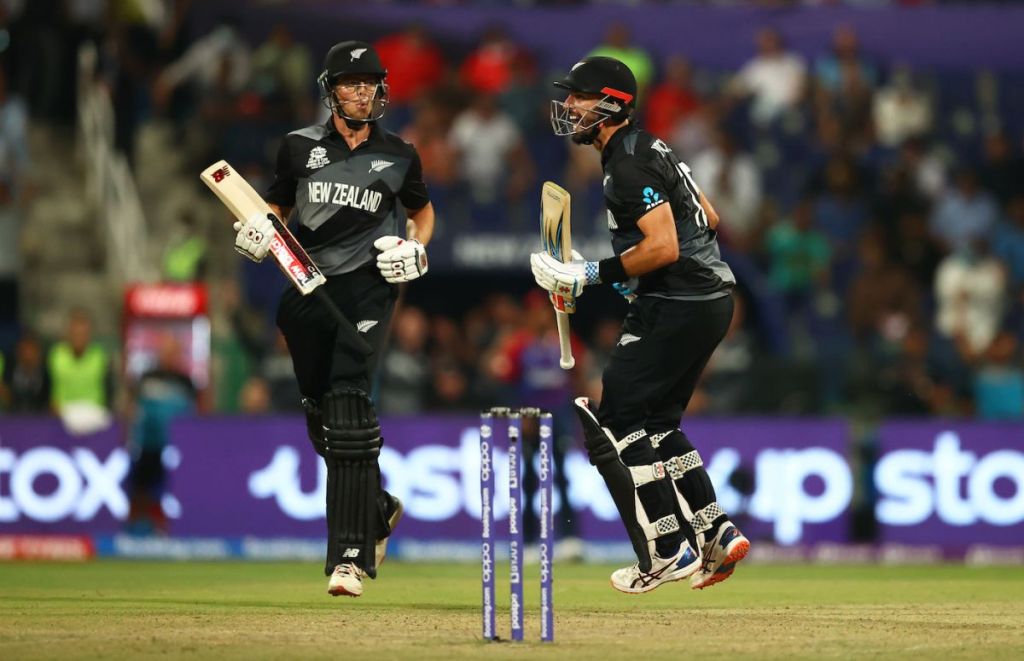
With 20 needed off two overs, Daryl Mitchell decided he only needed one over as he pumped Woakes for clean blows in the penultimate over and took New Zealand to yet another ICC final. Mitchell’s knock was reminiscent of Grant Elliot’s match winning knock, which also happened in a semis, in the 2015 WC. This win would’ve been a sort of redemption of the agony of losing against England in the WC final of 2019. New Zealand have had a memorable 2021. Their consistency of making it to the finals is respectable, and it will be interesting to see if they can win their third ever ICC trophy when they play the coveted final on Sunday.

-Vibhor Dubey

A jubilant Daryl Mitchell celebrates with his teammate Mitch Santner after hitting the winning runs, leading New Zealand to yet another final. ©ICC via Getty

India Record Thumping Win to Keep Hopes Alive

A reeling India took on Afghanistan in their third game of the World Cup. The Men in Blue were desperate to record a win in order to keep their hopes of making the semis alive. Not just win, they had to ensure that they win by a big margin. India’s skipper Virat Kohli lost yet another toss and was put into bat. But this time it looked as though India went in with a different intent altogether as openers KL Rahul & Rohit Sharma put on an absolute carnage in the powerplay, putting balls away with absolute ease.

The opening partnership kept getting bigger and bigger with every over, and both Sharma as well as Rahul looked in sublime form. There were some sumptuous cuts, lofted hits down the ground, and beautiful drives played as both of them got to their fifities. Not even the class of Rashid could bother the duo as their record partnership ticked 140 in a mere 14 overs. It was finally broken in the 15th over, but Pant and Pandya just continued the onslaught and kept rollicking along with some huge hits, both striking at a rate of over 200. A confident looking India posted a mammoth 210-2 in their 20 overs.

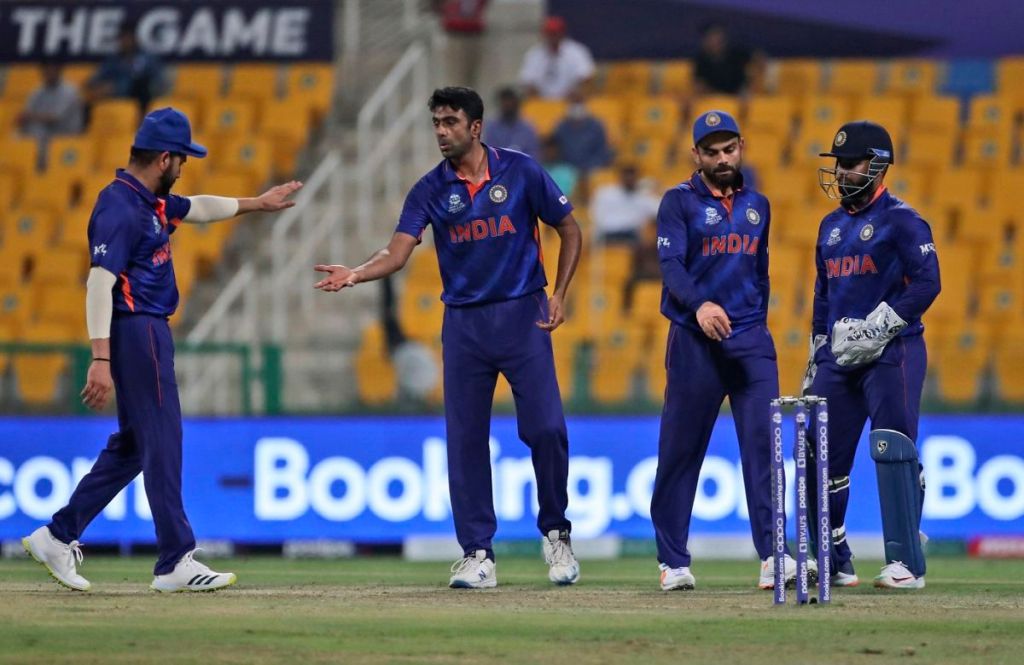
India needed a massive win in order to help their NRR, and they looked on the money right from the word go as Mohammed Shami dismissed the Afghan opener Mohammed Shahzad for a naught, with that trademark straight seam of Shami on display. After Bumrah sent left-hander Hazratullah Zazai back to the huts, Rahmanullah Gurbaz showcased his talent with a quick breeze 19 off 10 including some clean blows. Once he was dismissed, Afghanistan looked all over the place. Ravichandran Ashwin, in his comeback game bowled beautifully and picked two wickets in the middle overs. It went from bad to worse for Afghanistan as they couldn’t disguise Shami’s slower balls in the death and succumbed to them.

They fell fighting as even in the last over there were some big hits, but India comprehensively beat Afghanistan in all three facets of the game to mark their first win in this year’s T20 WC. That win ensures that India have a substantial increase in NRR and keep their hopes alive of making it to the semi finals. But given the turbulent start, their fortunes also lies in how New Zealand fare in their remaining games.

-Vibhor Dubey

Ashwin, who was making his T20I comeback after a gap of four years, celebrates with his fellow Indian team-mates. ©Associated Press

Blackcaps’ Streak Over India Continues

Both India and New Zealand had lost their opening encounters to Pakistan and were desperately looking for a win. This game was being called by many as a virtual knockout of sorts. The Men in Blue had never beaten the Kiwis in a World T20. After being sent in to bat, India’s innings never really got going. The runs were hard to come by in the powerplay and they lost two wickets of Ishan Kishan and KL Rahul, both being caught at deep square leg. The Kiwi spinners also continued to hold the stranglehold over India’s line up as they were immaculate with their lengths. Even though there wasn’t much purchase off the wicket, Mitch Santner and Ish Sodhi bowled in the right areas and caused the Indian batters to be erroneous in their shot selection.

Ish Sodhi in particular was fantastic with the ball, executing his leg spinners and wrong-uns to perfection. That led to the dismissal of skipper Virat Kohli and Vice Captain Rohit Sharma, both caught at Long-on. Santner was economical with the ball, giving away a mere 15 in his quota of 4 overs. Some excellent death bowling allowed New Zealand to keep India down to a total of 110/7.

In reply, New Zealand’s openers Daryll Mitchell and Martin Guptill started off decently. Bumrah broke their 24-run partnership, after Guptill mistimed and skied one up straight under mid-on’s throat. From there on, the game looked dead and buried. Opener Mitchell demolished the Indian bowling attack, taking on Shami, Thakur and Jadeja for big overs. The Blackcaps skipper Kane Williamson anchored the innings at the other end and gave as much strike to Mitchell as possible. The partnership was finally broken at 96, but a little too late as the game was already gone by then.

New Zealand cruised to a comfortable 8 wicket win, bagging two valuable points. The only good sign for India was that Hardik Pandya was fit enough to bowl two overs. After two massive losses against quality oppositions, India are all but gone out of this World T20, as their hopes of making it to the semis rely on other teams and their NRR. New Zealand on the other hand would wish to continue this momentum and win the remaining of their three games of the league stage.

-Vibhor Dubey

A dismayed Virat Kohli has a lot on his mind as India lose their second game on the trot against New Zealand at Dubai. ©ICC via Getty

Pakistan’s Comprehensive Victory Over Arch-Rival India

The highly anticipated rivalry took place when India and Pakistan locked horns in Dubai for the opening encounter for both sides in the T20 World Cup. Pakistan, after winning the toss, put India in to bat on a slowish surface. Pakistan seamers were on the money right from the word go as their young left-armer breathed fire in his opening spell. Shaheen Shah Afridi got the ball to hoop back in late to the Indian openers, dismissing both Rohit Sharma and KL Rahul rather cheaply.

It wasn’t long before India’s number four Suryakumar Yadav walked back to the huts after a brief knock of 11 off 8. The Men in Blue were reeling at 31-3, and needed to consolidate after a poor start. Skipper Virat Kohli and Keeper Rishabh Pant did just that and managed to get the scoreboard ticking. Kohli looked busy at the crease, rotating the strike and putting the odd ball away to the fence while his partner at the other end was clearing the rope in his trademark one-handed style.

It was the leggie Shadab Khan who broke that partnership, dismissing Pant for a well made 39 off 30 deliveries. The Pakistani pacers made full use of the conditions and used the change-of-pace to perfection. Even an express speedster like Haris Rauf who can touch 150 kmph consistently, put his ego aside, understood his role and used the change of pace deliveries with wonderful precision of length. This allowed his side to keep the strangle-hold on the Indian side through the middle overs.

Virat Kohli acted as the glue that held the innings together for India, but was dismissed soon after getting to a well-complied fifty. India ended up with 151/7 on the board, which looked like a par score, but a commendable effort after being 31/3 inside the powerplay.

In reply, Pakistan got off to a rollicking start. Their openers, Babar Azam and Mohammed Rizwan are known to take the game to the opposition in this format of the game, and they certainly did that. The ease with which they countered the likes of Jasprit Bumrah and Bhuvneshwar Kumar was exceptional to see. Babar Azam was at his conventional best, whereas Rizwan took the attack to the opposition, clearing the fence on 3 ocassions and batting at a tremendous strike rate of 143.

India just couldn’t seem to find the answer to breaking the partnership as it grew larger with every over. Dew was also not helping India’s cause, and it just made the wicket a little easier to bat on as suddenly it wasn’t gripping as much anymore. Even Varun Chakravarthy couldn’t make use of the long fences as Rizwan pulled him for 2 huge sixes over midwicket off the back-foot in a single over. Pakistan were cruising along and at no stage did they look in discomfort or give any chances, or even half-chances to India.

The way Pakistan constructed their innings was rather impressive because there were no rash shots, just proper text-book cricketing shots that fetched them all the runs. That sensibility is what pulled them through and made them win the game over their arch-nemesis by a massive margin of 10 wickets. This is a huge win for Pakistan and will give them the momentum and a healthy NRR that they need going forward in the tournament. The short nature of the tournament would mean that Pakistan are certainly in contention for the semi finals, and might just pull off something like they did in the Champions Trophy back in 2017.

-Vibhor Dubey

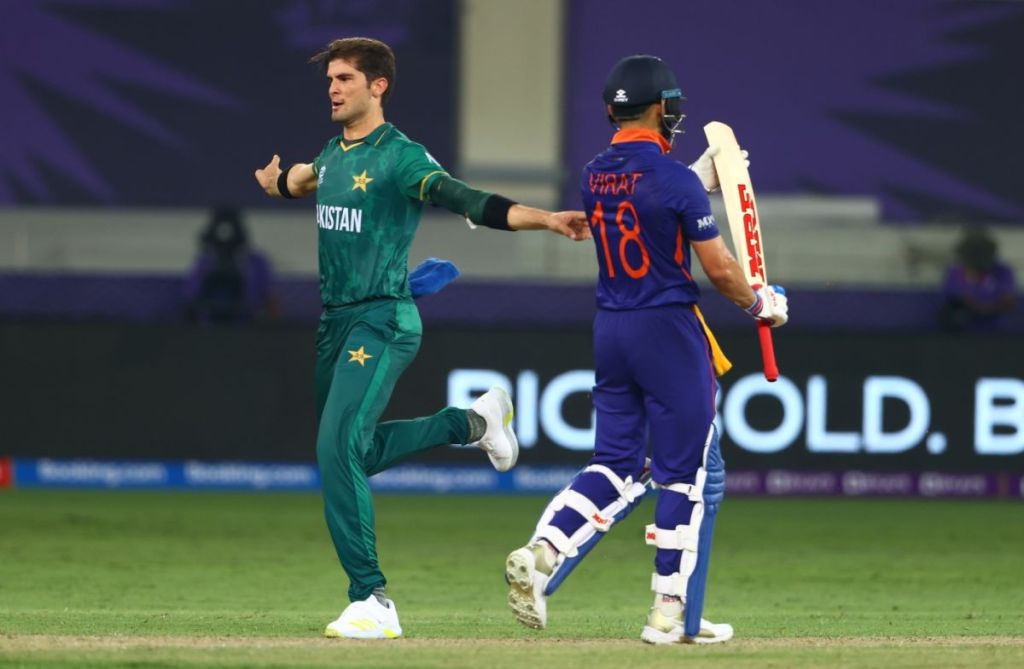
Pakistani left arm pacer Shaheen Shah Afridi celebrates after dismissing Indian skipper Virat Kohli. ©Getty Images

KKR’s Comeback Punch With Backs Against The Walls

The second leg of the IPL couldn’t have begun on a better note for Kolkata Knight Riders as they comprehensively beat Royal Challengers Bangalore by a massive margin of 9 wickets. The game began with RCB skipper Virat Kohli winning the toss and debatably deciding to bat first on a wicket that was slow to start off with.

The poor decision proved to be a costly one as the tackiness of the wicket, alongside the brilliant lengths of the KKR bowlers ensured the star-studded RCB batting line up never got going. They lost Kohli early, and that second wicket of Padikkal just opened up the flood gates. Debutant KS Bharat got done by pace, De Villiers was dismissed by a peach of a yorker by Dre Russ. Glenn Maxwell and Sachin Baby tried to string in a partnership, only for the former to throw his wicket away after a dry, boundary-less phase.

All five of the KKR bowlers were spot-on with their plans right from the word go. Seamers Prasidh Krishna, Lockie Ferguson and Andre Russell all ended up providing crucial breakthroughs for their side. Even the spinners Varun Chakravarthy & Sunil Narine were excellent with the ball, using the variations to good effect and keeping their economies to under 5 an over. Chakravarthy was the pick of the bowlers, taking 3 wickets in the middle overs.

KKR needed a meagre 93 to get in their 20 overs, and they came out all guns blazing to ensure that they don’t just get the win, but also get a high NRR, with the playoff phase coming ever so closer. Their Openers Shubman Gill and Venkatesh Iyer made it look like a piece of cake as they chased down 93 with 10 overs to spare. While this win gives KKR a wonderful momentum going ahead in the second leg, RCB will want to put this atrocious loss behind them and start afresh in their next game against table-toppers CSK in a few days’ time.

-Vibhor Dubey

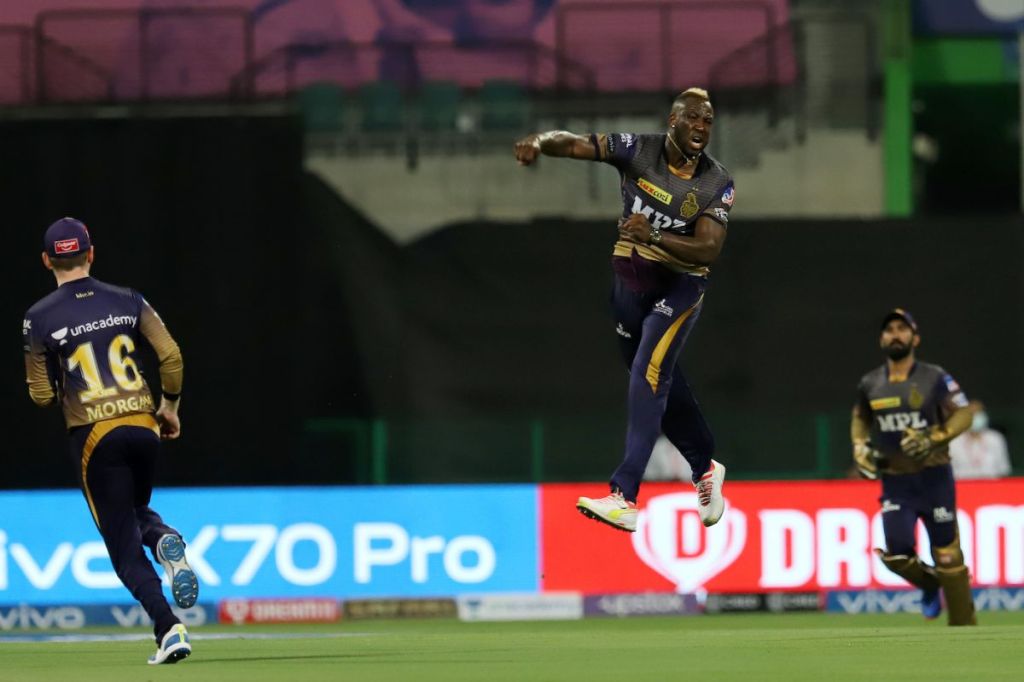
The mighty all-rounder Dre Russ is jubilant after sending back RCB’s key man AB de Villiers back to the hut for naught. © BCCI

BJ Watling : Effective Yet Overlooked

It is often said that the two least talked about people on a Cricket field are umpires and wicketkeepers. And that if you haven’t heard anything said about them, it generally means they’re doing their work flawlessly. A lot goes into the art of wicketkeeping, and competent keepers have the knack of making the job look rather easy. One such keeper, who went silently about his job without making too much of a fuss about it, bid farewell to Test Match Cricket earlier this week.

BJ Watling, the South African born Kiwi Cricketer was an integral part of the Blackcaps Test side in the last decade. A test career that lasts for over 12 years, comprising of 75 games, is commendable to say the least. Watling broke into the side to fill up the big shoes of Brendon McCullum in 2009, competing against the likes of Reece Young and Kruger van Wyk.

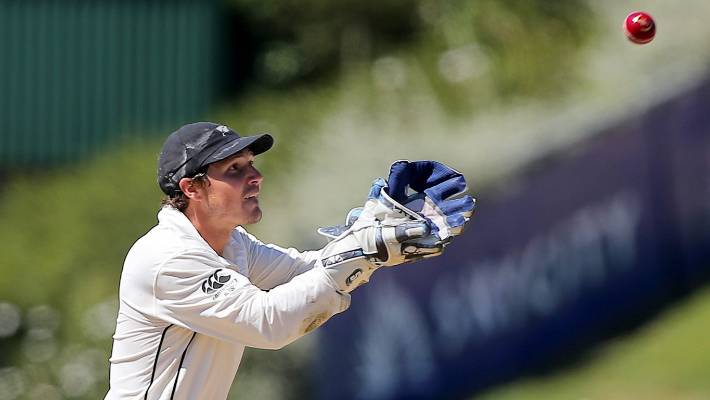
Unorthodox yet Tidy is what best describes Watling as a keeper. There was not much conventional about his keeping. In his crouch, his hands would be far apart. While gathering the ball standing back to the seamers, he would often collect it on his outer hip, leaving the risk of not covering ground in case there was a nick. However, just like MSD and a few other unconventional keepers to have played the game, there was method to his madness. He was incredibly good with his hands & feet, and was swift in his sideways movements.

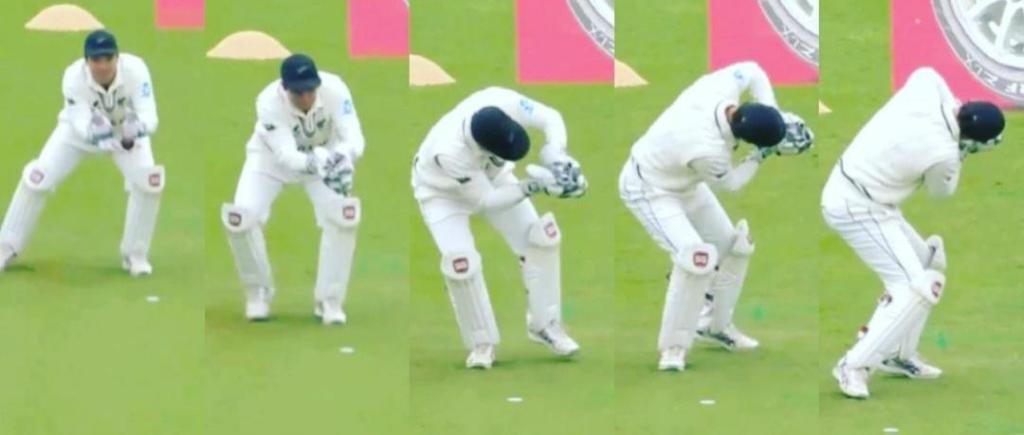
During the WTC Final, Nasser Hussain analyzed Watling’s technique while standing back to the stumps, and pointed out the way he would exaggerate watching the ball into the gloves, thereby taking away any chance of missing the one that swings late. Watling’s technical soundness resulted in him giving away just 4 byes in the entire test – which is a magnificent effort considering how much and how late the ball swings in Southampton.

‘Following it into the gloves’ : Watling at his technical best as he shows his class behind the stumps in his final test.

Despite being so good with the gloves and surpassing Dhoni in the list of most Test dismissals, Watling isn’t well renowned as a Test Cricketer. Jarrod Kimber, an esteemed Cricket writer, describes Watling as someone who is ‘designed in a lab to be invisible’. This is the sad truth of Keepers who couldn’t make it big as batsmen. Most of the glory and glamour in Cricket comes from scoring runs and taking wickets, while some of the toughest arts in our sport are easily forgotten.

The fact that Watling copped one on the finger in the second innings of his last test is so characteristic of what being a Wicketkeeper is about. But as BJ Watling walked back to the dressing room with a dislocated finger for the final time in Test Cricket without any acknowledgement, he would’ve held his head high for having served New Zealand Cricket and World Cricket for 12 years, and known that avid cricket fans as well as his teammates will remember his contribution for a long time to come.

-Vibhor Dubey

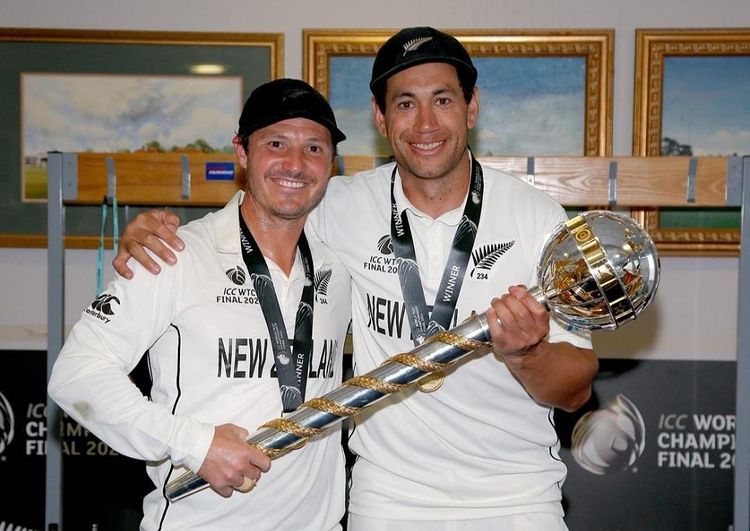
Cherry on top : BJ Watling and Ross Taylor hold the mace after New Zealand beat India in the WTC Final in Southampton on 23rd June. © @blackcapsnz/Instagram

Devon Conway’s Debut : Stuff Dreams Are Made Of

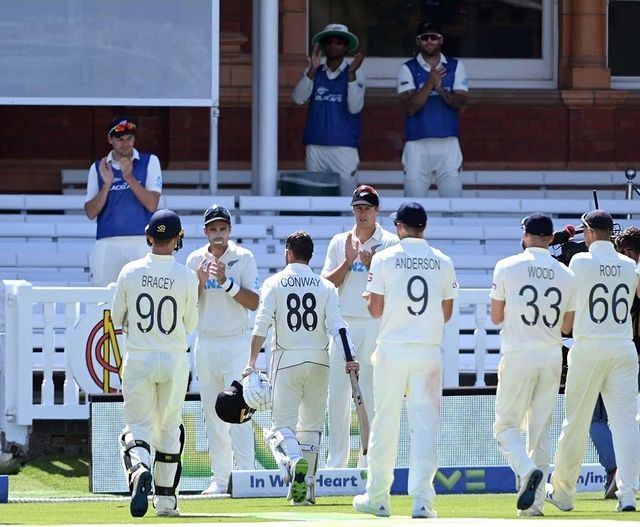
When New Zealand went out to bat on the morning of the first day of the opening test at Lord’s, there was one opener who had waited for over a decade for that opportunity to come. Devon Conway, the 30 year old left handed batsman had moved from South Africa, sold his car and all his property to start afresh in New Zealand and build a career from scratch. All this must’ve been running through the mind of the debutant as he walked down the long-room at the Home of Cricket.

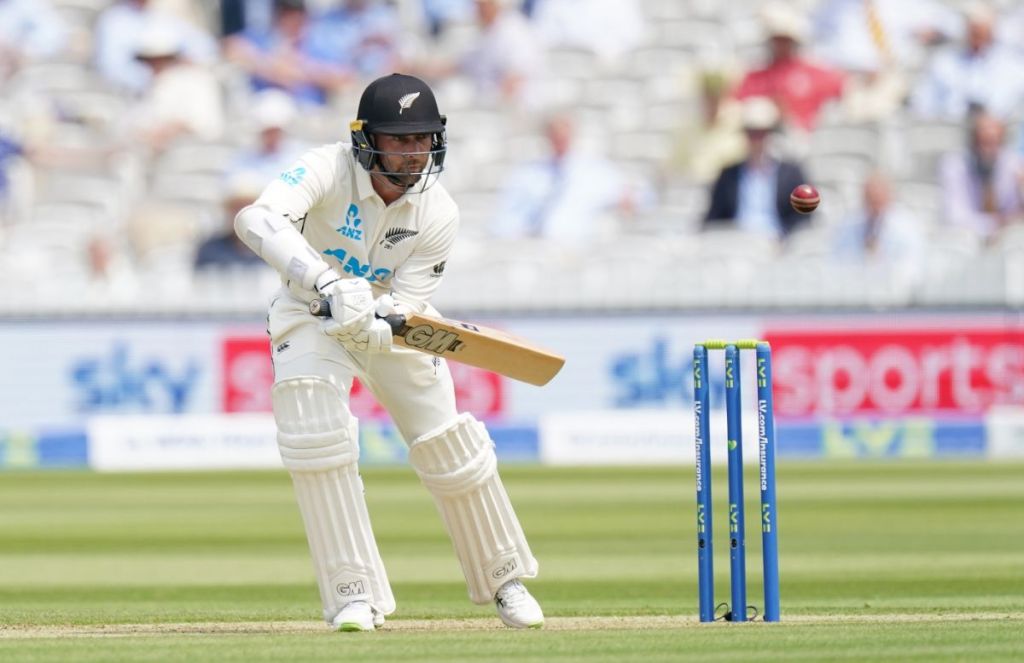
He had to wait for a bit to get a taste of facing bowlers at the International level, as his batting partner Tom Latham faced all of the first three overs himself. But once Conway got on strike, he looked at ease right from the start. Neither the much talked about slope, nor the experience of Broad and Anderson seemed to worry the Left Hander, as he looked in solid touch on the morning of Day 1. Conway was technically sound, batted exactly how an opener should in English conditions. He was compact in defense, played the ball under his nose, driving square of the wicket to negate the movement off the slope.

New Zealand opener Devon Conway looked solid in defense on Day 1 as he played the ball late. © PA Photos/Getty Images

Lovers of Test Match batting were glued to the screen as Conway unleashed some gorgeous drives through the off side. Without much assistance off the wicket, English bowlers tried using the crease and employed various tactics. The pacers got closer to Conway’s pads, tried surprising him with some short-stuff, but the opener was quick to pounce on those deliveries with flicks and pulls with minimal effort. There wasn’t too many shots in the V as he was letting the ball come to him rather than reaching out in front with the hands.

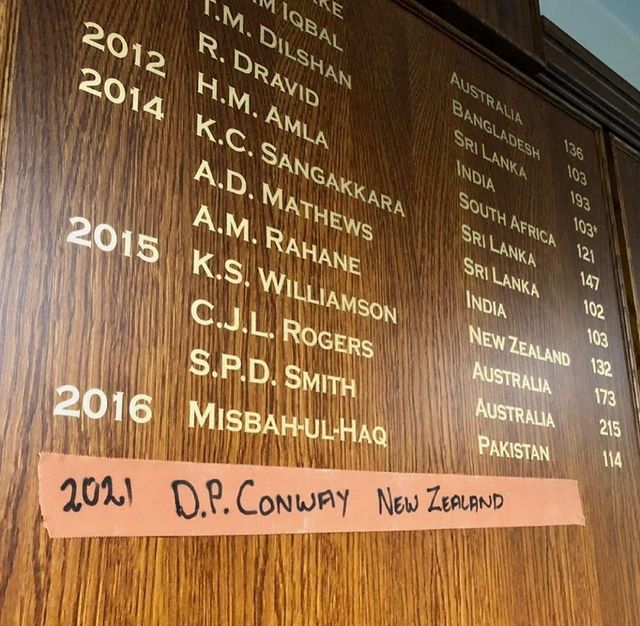
Those hours of discipline and concentration paid off, as Conway brought up three-figures in style. A pick up off the pads, using the pace of Mark Wood and clearing the men in the deep to bring up a well deserved debut 100. The celebration was subdued, much like you expect from players from New Zealand, even though he had done something the likes of Tendulkar and Lara haven’t done, something that millions of kids around the globe dream of doing – to get on the Honors Board at Lord’s.

A moment to savour – Devon Conway gets his name on the Lord’s Honours Board after scoring a memorable 200. © homeofcricket / Instagram

Come Day 2, and Conway wasn’t done yet as he continued where he had left off on Stumps on the opening day. Root came in to bowl to take the ball away from the left hander, but to no use as he got punished through the off side and straight back down the ground. England persisted with the short-ball with a short-leg in place and men back for the pull and the hook, but to absolutely no avail as Conway pulled them away with disdain.

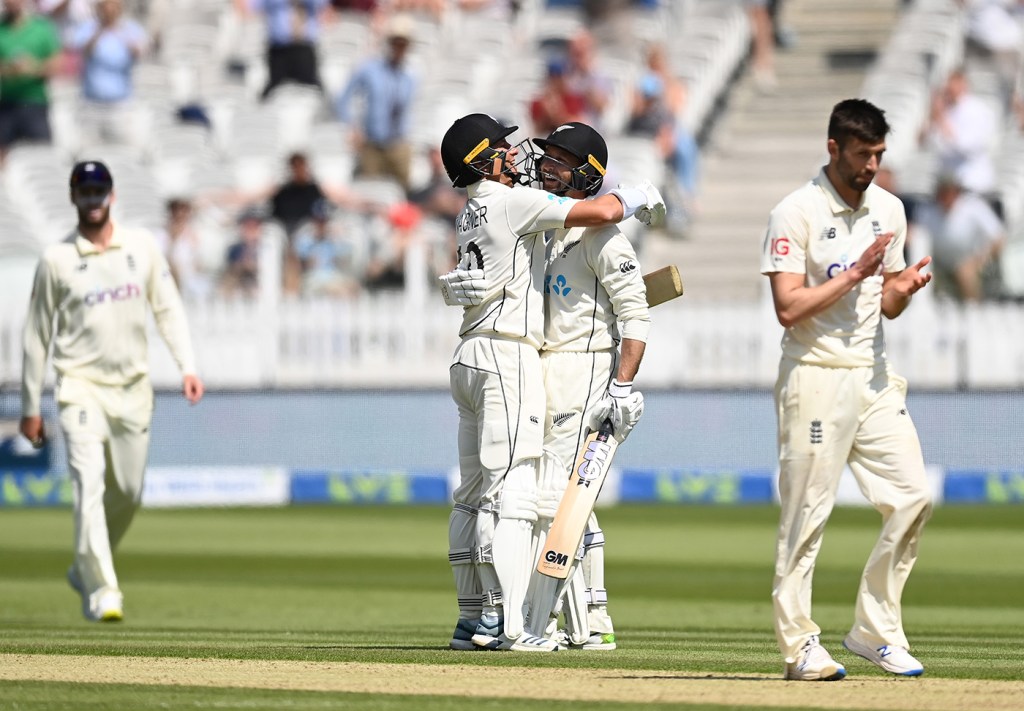
Wickets around him started to tumble, with the middle order struggling to make a dent, and soon New Zealand were 9 down, with the opener on 186. Whether Wagner at no.11 could survive was the deciding factor whether Conway could get to a magical debut double-hundred. Turns out, Wagner didn’t just survive, but unleashed a cameo of 24 off 17 balls. This allowed Conway to go to 194, and then to 200 with a six over fine-leg off Mark Wood.

Number 11 Neil Wagner embraces Opener Devon Conway after he gets to his 200. (Photo by Gareth Copley/Getty Images)

The man who had to start from scratch, go from underperforming in South Africa, moving to NZ and working up the ranks, finally making his Test Debut at the age of 30, that man had finally proved his weight in gold with an innings that broke a plethora of records and caught millions of eyes around the globe. As Devon Conway humbly acknowledged the crowd and his teammates at the iconic Lord’s balcony, everyone watching felt that this is it, this is the stuff dreams are made of.

-Vibhor Dubey

The debutant double-centurion walks back to a warm round of applause from his teammates and the opposition. © homeofcricket / Instagram

A Fightback For The Ages

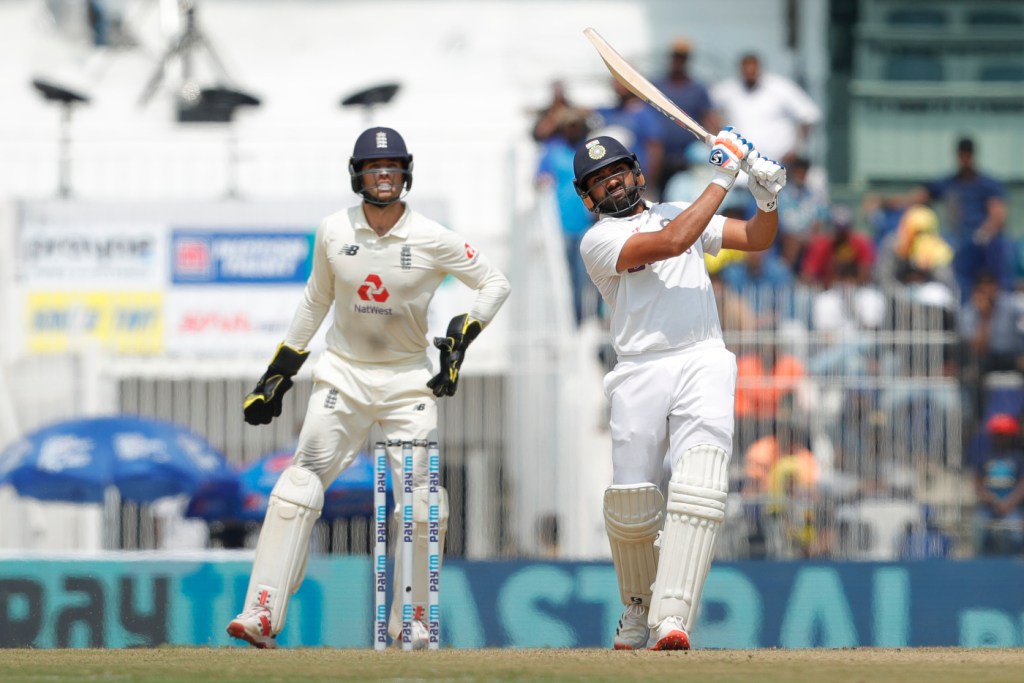
Being one down going into the second test at Chennai, India were looking for a strong resurgence. They started their revival by winning a vital toss and batting first. Opener Rohit Sharma was on fire right from word go, scoring at almost run-a-ball from the onset. The changed English bowling line-up did chip in with wickets at the other end with Olly Stone looking impressive in his debut test.

India were three down at lunch, with their skipper Virat Kohli sent back to the sheds by a brut of a ball from Moeen Ali. But England’s lineup didn’t consist of veteran James Anderson or the young legs of Jofra Archer. India capitalized on this lack of experience. Rohit Sharma and Vice captain Ajinkya Rahane dug in and batted for long hours, scoring runs at a rate of knots. Rahane unleashed some beautiful drives both off the front and the back foot on his way to 50, while Rohit Sharma got to his 100 with some clean blows.

Indian opener Rohit Sharma was in sublime form as he teed off with some flamboyant strokes. ©BCCI

The ball was turning square already, and this proved to be the undoing of both the set batsmen as they were dismissed by spinners Leach and Ali. Indian wicket-keeper batsman Rishabh Pant continued where he left off in the first test, and took to the bowlers and got to a quickfire 58. His innings propelled India to a commendable 329.

England in reply looked absolutely dismal, losing four wickets before lunch on Day 2. Ashwin was bowling magnificently and getting some great purchase off the deck. Even Axar Patel chipped in with the huge wicket of Joe Root. The puff of dust extracted out of the surface was a sight to behold for everyone watching. Ollie Pope and Ben Foakes worked hard for some runs, the latter remaining unbeaten after an impressive 42. Ashwin picked a fifer. The England scorecard told a sorry tale as they were dismissed for a mere 134, still behind by 195.

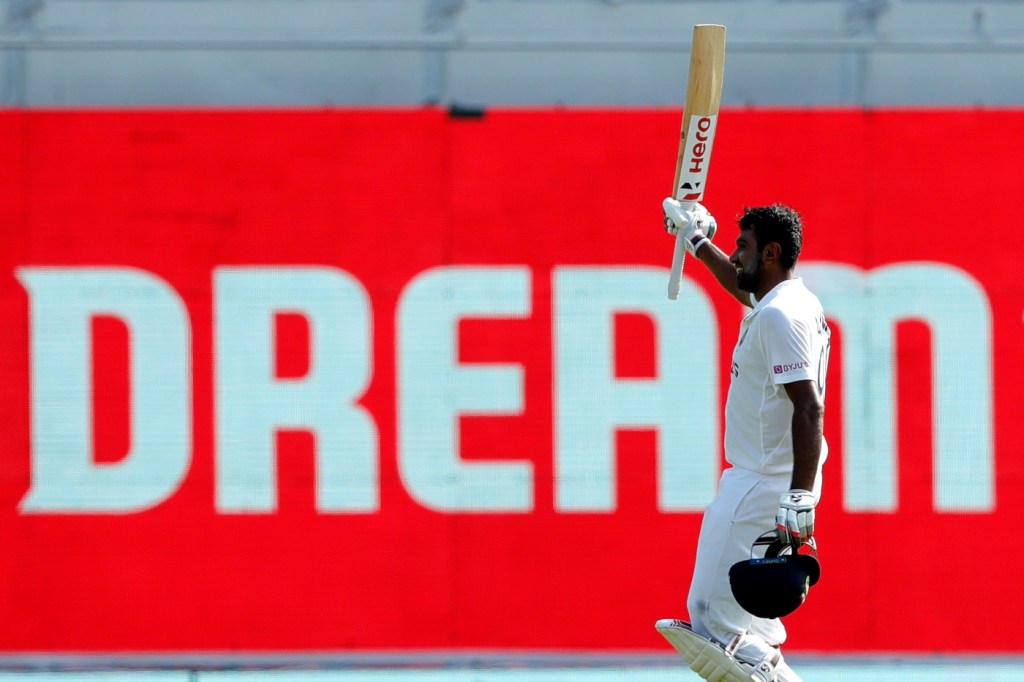
India’s second innings was a memorable one to say the least, as it saw one of arguably the best innings in India’s test match history. It was Day 3, also known as the moving day. And it sure did move a lot of people to the core as Indian All-Rounder Ravi Ashwin scored a terrific 106 off 148 balls. He played the likes of Leach and Ali with ease on a track where batting against spin was anything but easy. His hundred is one that shows that if one applies themselves and looks to be positive, it doesn’t matter if the deck is a green-top or a rank-turner. The whole of India will remember that innings for a long time to come.

A fitting image – Ravi Ashwin getting to a magnificent 100 as the background reads ‘DREAM’
©BCCI

That, along with the skipper’s valiant half century meant that England were to chase 481 against the lethal spin trio of India. The fourth innings started and ended much the same as the first one, with Indian spinners dominating. This time Axar Patel showing his magic by picking up 5 for the innings. The visitors were wrapped up at 164, losing by 317 runs. With the series in the balance, the pink-ball test at Ahemedabad will draw a lot of eyeballs and the teams will lock horns to take the lead going into the last test.

-Vibhor Dubey

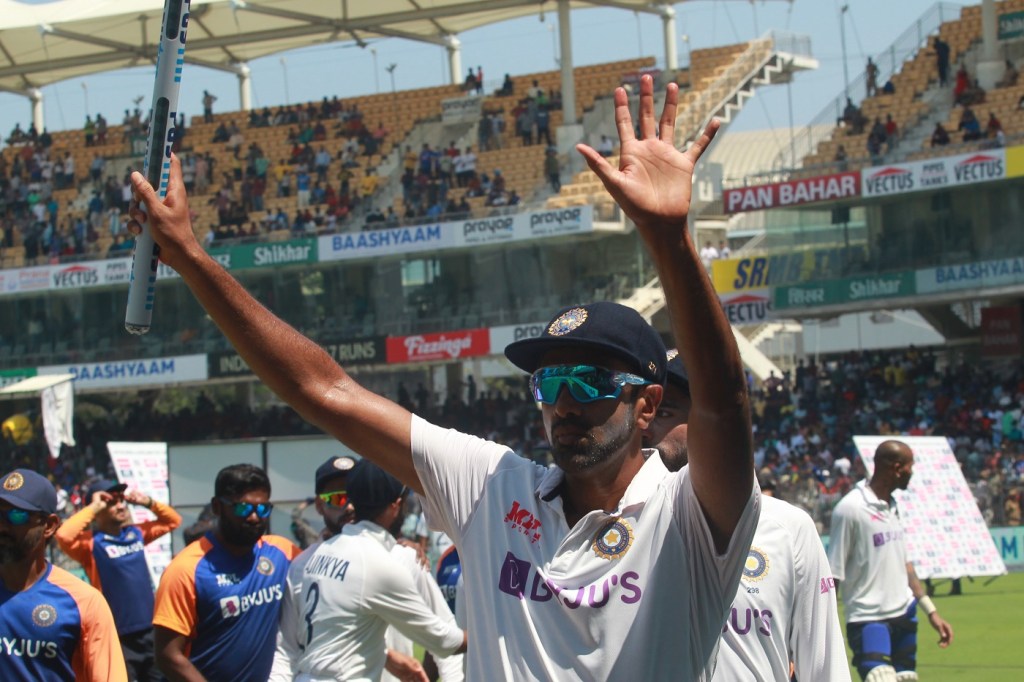
Ravichandran Ashwin acknowledges the Chennai crowd after India’s big win over England in the second test.
Photo by Pankaj Nangia/ Sportzpics for BCCI